Mouth Taping for Sleep: What You Need to Know
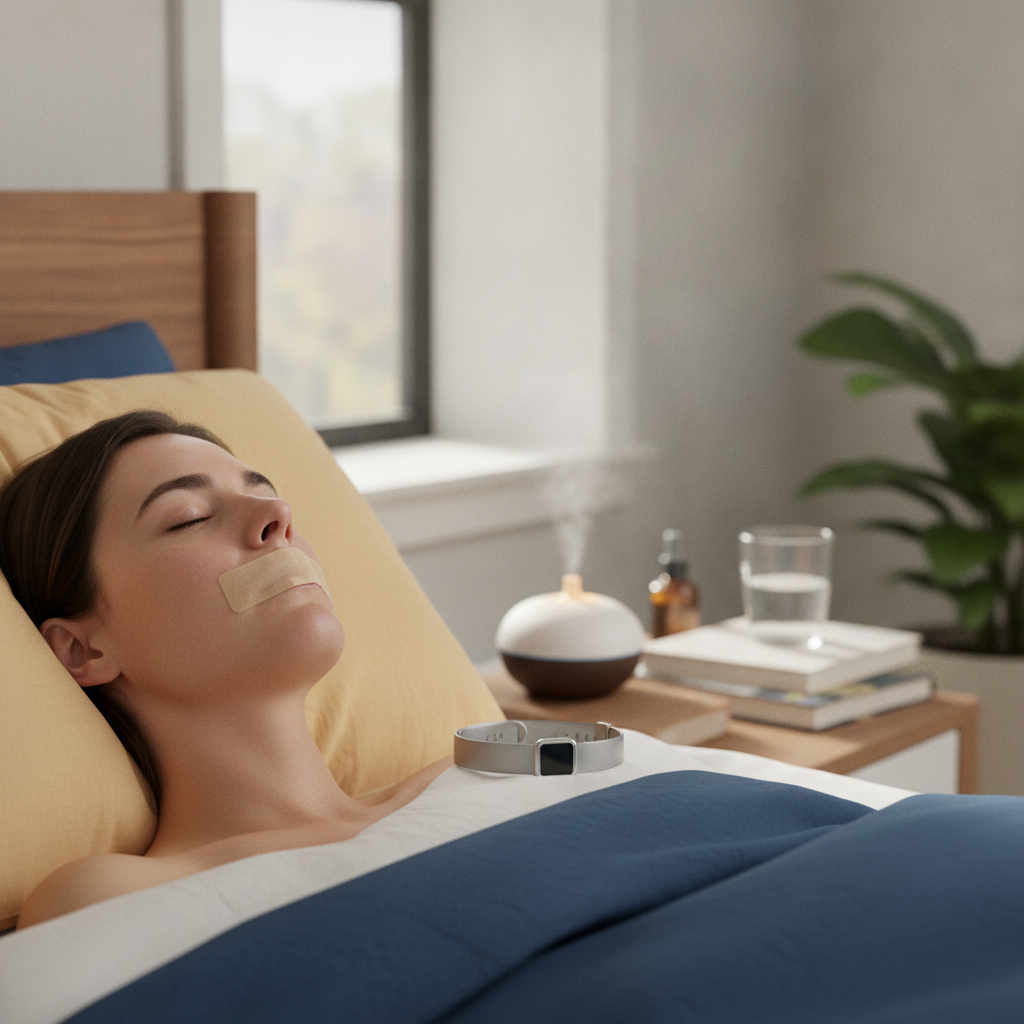
Mouth taping during sleep encourages nasal breathing, which proponents claim improves sleep quality, reduces snoring, and enhances morning energy. The practice has gained mainstream attention through social media and health podcasts.
The Science of Nasal Breathing
Nasal breathing filters, humidifies, and warms air before it reaches the lungs. It also produces nitric oxide, a vasodilator that improves oxygen absorption by 10-15% compared to mouth breathing. During sleep, nasal breathing maintains optimal CO2 levels that support deep sleep stages.
Documented Benefits
Reduced snoring is the most consistent finding across user reports and small studies. A 2022 study in Healthcare found that mouth taping reduced snoring severity in mild obstructive sleep apnea cases. Some users report fewer nighttime awakenings and reduced morning dry mouth.
How to Start Safely
Use purpose-made mouth tape (porous, easily removable) rather than industrial tape. Start during daytime naps to build comfort. Ensure nasal passages are clear (address allergies or congestion first). Never tape with a stuffy nose.
Who Should Avoid It
People with moderate-to-severe sleep apnea (untreated), nasal obstruction, deviated septum, or anxiety about restricted breathing should not attempt mouth taping without medical clearance.
Complementary Practices
Address nasal congestion first through saline rinses, nasal strips, or allergy management. Practice daytime nasal breathing to build habit. Sleep on your side rather than back. Elevate the head slightly.
Realistic Expectations
Mouth taping addresses the symptom (mouth breathing) but not necessarily the cause. If nasal obstruction, allergies, or sleep apnea underlie the mouth breathing, address root causes first.