Sound Therapy and Habituation: Retraining Your Auditory System
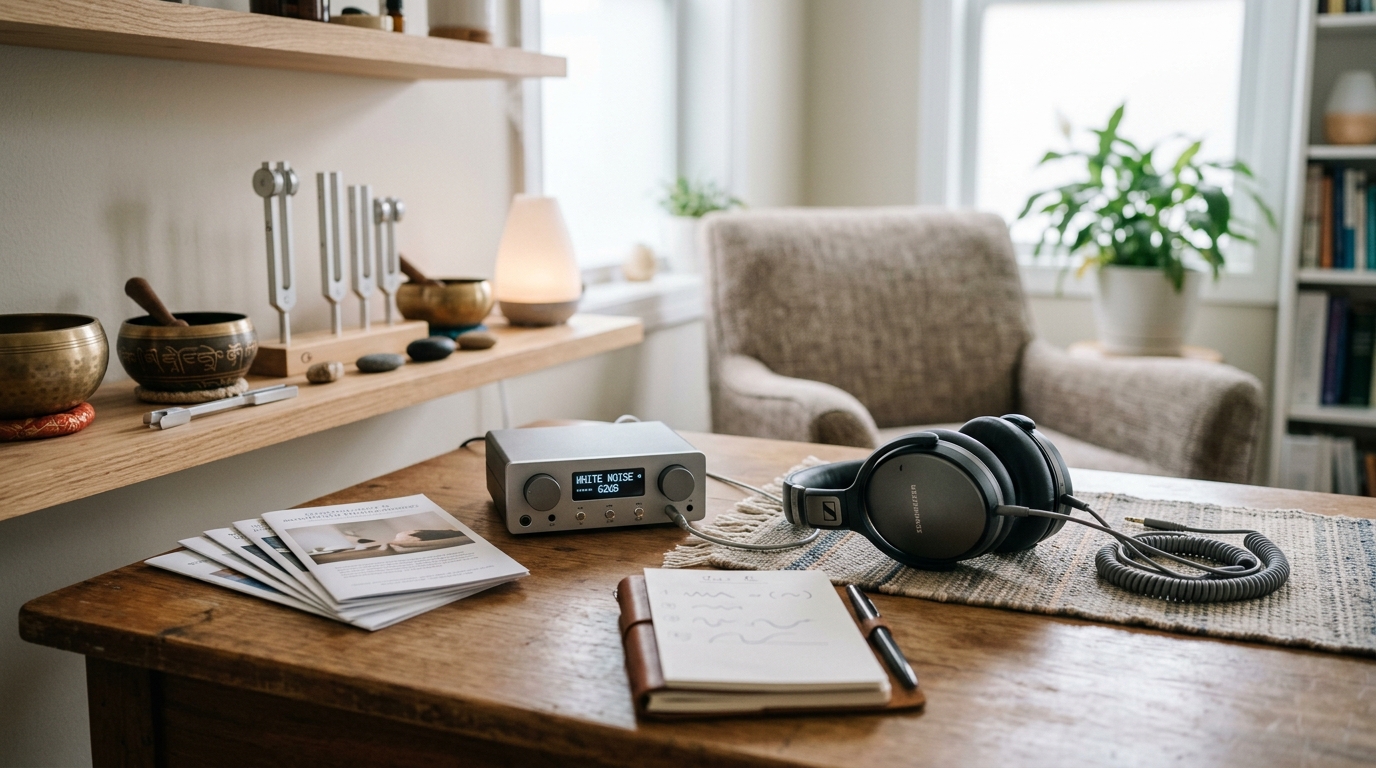
How Habituation Works
Habituation is the brain's natural process of filtering out irrelevant stimuli. Tinnitus awareness often increases when it's the dominant sound (quiet environments). Introducing competing stimuli allows habituation to occur.
White Noise and Pink Noise
White noise (frequency across all audible ranges) and pink noise (deeper frequencies) provide neutral background sound:
- Masks tinnitus during quiet times
- Supports sleep
- Allows habitual filtering
- Reduces tinnitus-related anxiety
Available through apps, machines, or fans for cost-effective use.
Targeted Masking
Some people benefit from sounds specifically matching or relating to tinnitus pitch:
- Tinnitus Retraining Therapy (TRT) uses matched-frequency sounds
- Notched music (with frequencies around tinnitus removed) supports habituation
- Nature sounds or music may work better than plain noise for some
Tinnitus Retraining Therapy (TRT)
A structured program combining:
- Counseling reducing emotional responses
- Low-level sound exposure matched to tinnitus characteristics
- Consistent application over months
Clinical studies show TRT effective for significantly reducing tinnitus awareness in most participants.
Sleep Support Through Sound
Many struggle with tinnitus during quiet nights. Solutions include:
- White noise machines
- Sleep headbands with audio
- Apps providing tinnitus-masking sounds
- Fans or air purifiers providing ambient sound
Gradual Exposure
Starting with low-level sound and gradually reducing volume over time supports natural habituation. The goal is eventually filtering tinnitus unconsciously.
Integration with Stress Management
Sound therapy works best combined with stress reduction and acceptance, addressing both auditory and psychological components of tinnitus experience.
Consistent sound therapy application allows most people to significantly reduce tinnitus intrusiveness within months.